
The Perilous World of 1880s Plant Hunters: Orchidelirium, Fortune, and the Forbidden Bloom by Jocelyne Waddle (2026)
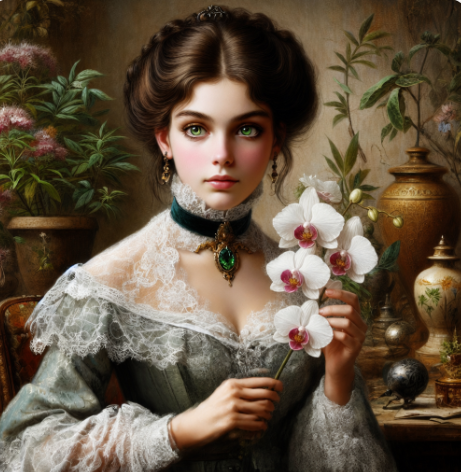
By the late nineteenth century, a strange fever had settled over the Western world — a shimmering, restless hunger for the rare and the exotic. Orchidelirium, as it came to be known, was more than a passing fascination. It rearranged fortunes, drove scientific rivalries, and sent men into jungles that swallowed them whole.
For some families, the danger was not a distant tale printed in London papers but a private grief. In Death Comes at First Light, Lady Aurora grows up in the long shadow of this mania. Her father and brother vanished on botanical expeditions, claimed by the same wilderness that lured so many Victorian plant hunters with promises of glory. Their absence is a quiet reminder that the orchid craze was never simply about beauty — it was about ambition, risk, and the human cost of chasing a bloom no one else possessed.
A World Driven by Rarity
By the 1880s, plant hunting had become a global enterprise — part science, part commerce, part imperial theater. Wealthy collectors in England and America demanded the rarest orchids, the strangest ferns, the most astonishing palms. Botanical gardens competed like rival courts, each determined to unveil the next marvel.
At the center of this frenzy stood the plant hunters themselves: daring, stubborn, sometimes brilliant, sometimes reckless men whose exploits shaped the horticultural world.
The Men Who Fed the Orchid Craze
Victorian plant hunting was not a genteel pastime. It was a profession built on danger and audacity. Among its most infamous figures were:
Robert Fortune — Celebrated and distrusted in equal measure. Disguised as a Chinese merchant, he smuggled tea plants for the British Empire and stripped entire valleys of orchids and camellias. His success was undeniable; his ethics, less so.
Charles Maries — A collector for Veitch Nurseries, known for his stubborn courage. He survived typhoons, shipwrecks, and political unrest, returning with plants that made fortunes for others.
Benedict Roezl — Perhaps the most dramatic of them all. A towering Czech collector with a metal hook for a hand, he discovered more than 800 species. He traveled through Mexico, Peru, and Bolivia, often injured, always relentless.
Gustav Wallis — “The King of Collectors,” whose expeditions were marked by hardship and tragedy. He lost his health, his money, and eventually his life to the jungles he loved — yet he brought back some of the most coveted orchids of the century.
These men were toasted in London drawing rooms, but their fame was built on peril. For every celebrated hunter, dozens died anonymously — claimed by fever, river currents, or the quiet violence of colonial frontiers.
Danger as the Cost of Beauty
To hunt orchids in the 1880s was to wager one’s life. Collectors faced:
· Malaria, dysentery, and tropical fevers
· Venomous snakes and predatory animals
· Bandits, uprisings, and colonial conflict
· Starvation, shipwrecks, and isolation
Yet the rewards were staggering. A single rare orchid could fetch the equivalent of tens of thousands of dollars today. Nurseries hired hunters the way aristocrats hired jewel thieves — discreetly, competitively, and with the full expectation of danger.
The Economics of Obsession
London auction houses became stages for horticultural drama. Crates of orchids — half‑dead from their journey — were bid upon with a fervor usually reserved for diamonds. Rival nurseries spied on one another, sabotaged shipments, and bribed ship captains for early access to specimens.
The orchid trade was not a hobby. It was a high‑stakes market driven by rarity, prestige, and the Victorian appetite for the exotic.
The Forbidden Flower
One of the strangest footnotes of orchidelirium is the belief that orchids were too sensual for women.
In England, many horticultural societies discouraged — and sometimes outright barred — women from cultivating them. Orchids, with their voluptuous shapes and intricate reproductive structures, were considered dangerously suggestive. Male botanists described them in language that hovered on the edge of the erotic. The fear was simple: a woman who studied orchids too closely might become “overstimulated.”
So while men filled their conservatories with exotic blooms, women were steered toward ferns, roses, and other “appropriate” plants. The irony is sharp: women were already contributing enormously to botany — often anonymously, often without credit — even as society tried to keep them away from the very flowers they understood so well.
Aurora and the Weight of a Blossom
In Death Comes at First Light, Aurora encounters this tension with the quiet precision of a woman who has learned to navigate a world eager to misread her. When Lord Sommerset teases her about “puttering with orchids,” she must answer with the careful restraint expected of Victorian women — polite, measured, and endlessly aware of the consequences.
He treats the question lightly. She knows better. Orchids have ruined men. A woman’s curiosity about them could ruin her.
Her refusal is gentle but firm, shaped by grief, caution, and the weary discipline of a woman who has learned how quickly a misstep can be twisted into “nervousness” or “excessive imagination.” In Victorian England, a woman who asked too many questions, who bristled at condescension, who showed too much intellect or too little compliance, risked being labeled unwell — a diagnosis that could end in confinement.
So Aurora answers with care. Not out of meekness, but out of the hard-earned knowledge that safety often depended on silence. It is the same tightrope countless women walked: the constant vigilance, the fear of being misunderstood, the quiet rebellion of refusing to be diminished even as the world insisted she should be.
A Legacy Rooted in Beauty and Exploitation
The plant hunters of the 1880s left behind a complicated legacy. They expanded scientific knowledge and introduced extraordinary species to Western horticulture. But their work also carried a cost: environmental devastation, colonial exploitation, and the erasure of indigenous expertise.
And woven through it all is the story of orchids — flowers that symbolized wealth, danger, sensuality, and the Victorian fear of women’s curiosity.
Today, when we admire an orchid in a shop window or greenhouse, we are looking at the descendant of a global obsession that once sent men into the wilderness and kept women at arm’s length from the very beauty they longed to study.


Comments